
Resumen IA: A federal appeals court blocked the government's attempt to end Temporary Protected Status (TPS) for Haiti, temporarily preserving immigration protections for more than 350,000 Haitian immigrants in the United States. The March 6, 2026 ruling determined that the termination of the program was “arbitrary and capricious.” Although TPS remains in effect for now, the government has asked the U.S. Supreme Court to intervene.
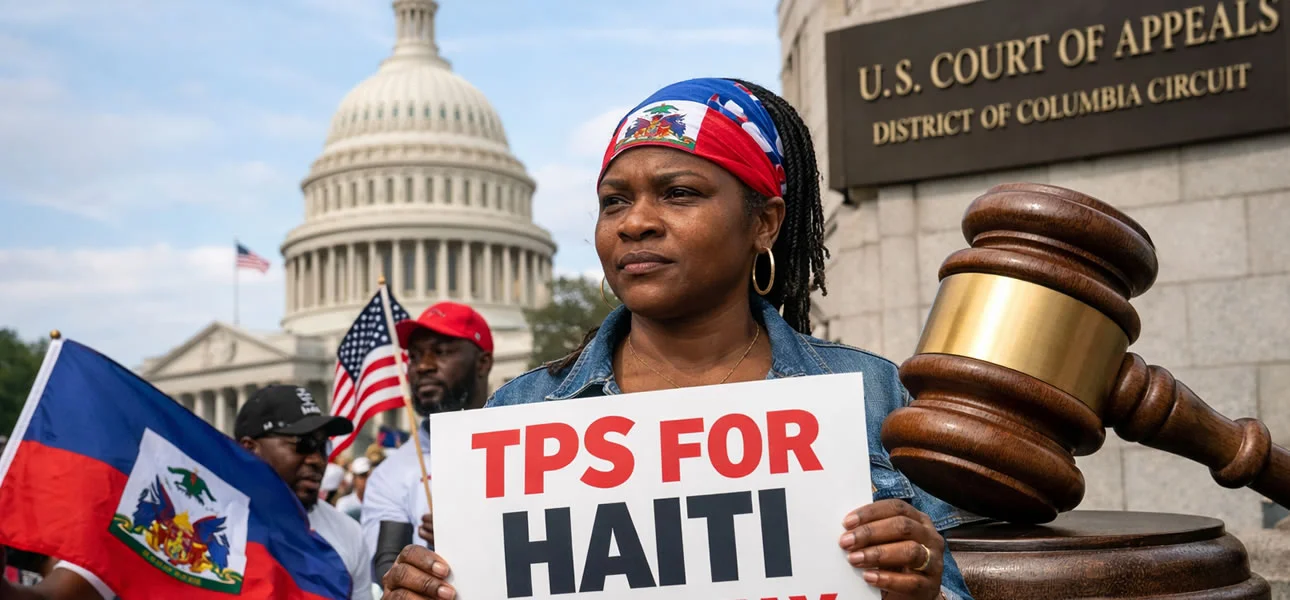
Haiti originally received TPS after the devastating 2010 earthquake, and the program has been renewed several times due to the country's political instability, gang violence, and economic crisis.
This status is not permanent residency or a direct path to citizenship, but it provides temporary protection from deportation and allows individuals to obtain work authorization.
• A temporary victory in court
• Recent timeline of TPS in Haiti
• What does this mean in practice for Haitian immigrants?
• What should Haitian immigrants do now?
• Frequently Asked Questions
• Conclusions
For the approximately 350,000 Haitians with this status, the court decision is a relief, but not a definitive solution. Here's a breakdown of the current situation
1. Status in Limbo: Although the Department of Homeland Security (DHS) under the current administration announced the termination of the program in November 2025, the courts have declared that decision "arbitrary and capricious." For now, the status quo remains, meaning you are still legally protected.
2. The Battle Escalates to the Supreme Court: Just on March 9, 2026, the Department of Justice formally requested the Supreme Court to intervene urgently to overturn these injunctions. The government argues that lower court judges are interfering with the Executive's authority to conduct foreign and immigration policy.
3. Employment and Form I-9: Many employers are confused by the "termination" news. However, organizations like the Haitian Bridge Alliance have clarified that, by court order, employers must accept current work permits (even if the printed expiration date has passed), provided that USCIS has issued an official automatic extension in the Federal Register. ↑
The termination is based on two main pillars analyzed by the US government:
✅ November 28, 2025: Homeland Security Secretary Kristi Noem announced the final termination of the program for Haiti, with an end date of February 3, 2026. She argued that conditions in Haiti no longer justified protection.
✅ February 2, 2026: Judge Ana C. Reyes blocked the termination one day before it was due to expire. In an 83-page opinion, the judge called the government's decision "arbitrary and capricious" because it: failed to adequately consult with other federal agencies; failed to seriously assess the current humanitarian conditions in Haiti (gang violence, collapse of the rule of law); and also ignored the devastating impact that deporting hundreds of thousands of people would have.
✅ March 6, 2026: The District of Columbia Court of Appeals (by a 2-1 decision) upheld Judge Reyes's order. Haiti's TPS remains in effect and benefits continue.
✅ March 9, 2026: The Trump administration is asking the Supreme Court to expedite the end of the program. ↑
No. A ruling by the D.C. Circuit Court of Appeals blocked the termination of the program, so TPS for Haiti remains in effect temporarily.
Not for now. As long as the court ruling remains in effect, the beneficiaries continue to be protected from deportation.
Yes. Work permits associated with TPS can be kept valid through automatic extensions issued by the federal government.
The government has asked the Supreme Court to intervene in the case. The program's future will depend on the court's decisions in the coming months.
The Department of Justice has requested urgent intervention. The Supreme Court could decide to review the case or maintain the current injunction. Until the Supreme Court issues a contrary ruling, you remain protected under TPS.