

Contáctanos

U.S. Supreme Court Allows Trump Administration to End TPS for Haitians and Syrians, Putting 356,000 Immigrants at Risk of Deportation


The U.S. Supreme Court ruled that the Trump administration may move forward with ending Temporary Protected Status (TPS) for approximately 356,000 Haitian and Syrian nationals. Learn who is affected, when the decision could take effect, and what legal immigration options may still be available.

QUICK ANSWER

On June 25, 2026, the U.S. Supreme Court ruled 6–3 in Mullin v. Doe, consolidated with Trump v. Miot, allowing the Trump administration to terminate Temporary Protected Status (TPS) for approximately 350,000 Haitian nationals and 6,000 Syrian nationals. Writing for the majority, Justice Samuel Alito concluded that the federal TPS statute limits judicial review of decisions made by the Department of Homeland Security (DHS) regarding the designation or termination of TPS. Although the ruling does not authorize immediate deportations, it removes court-ordered protections that had temporarily blocked the government's actions and could ultimately leave hundreds of thousands of immigrants without work authorization or lawful immigration status.
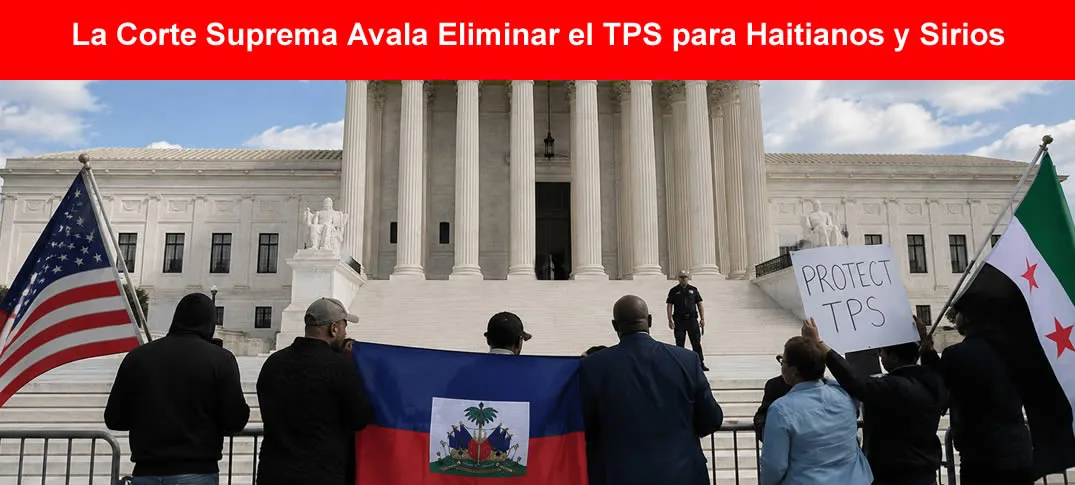
U.S. Supreme Court Allows Trump Administration to End TPS for Haitians and Syrians

What You Need to Know in 30 Seconds

  • The U.S. Supreme Court ruled 6–3 on June 25, 2026, in Mullin v. Doe, allowing the Trump administration to move forward with ending TPS protections.
  • The decision removes court injunctions protecting approximately 350,000 Haitians and 6,000 Syrians.
  • The Court concluded that federal courts generally cannot review DHS decisions to terminate Temporary Protected Status.
  • The ruling does not order immediate deportations, but it could eventually result in the loss of legal status and employment authorization for many TPS beneficiaries.
  • Justice Elena Kagan delivered her dissent from the bench, an uncommon practice reserved for cases of exceptional importance.
  • Immigration attorneys believe the decision could affect more than 1.3 million TPS beneficiaries from 17 designated countries in future cases.
  • The underlying lawsuits continue in the lower federal courts despite the Supreme Court's ruling.
  • TPS beneficiaries should immediately explore legal options such as asylum, family-based immigration, employment-based immigration, or other forms of relief.

Key Facts
6–3
Supreme Court Vote
350,000
Haitian TPS Holders
6,000
Syrian TPS Holders
1.3M
TPS Beneficiaries Potentially Affected

The U.S. Supreme Court has allowed the Donald Trump administration to end Temporary Protected Status (TPS) for more than 356,000 Haitian and Syrian nationals. The ruling could leave thousands of immigrants without work authorization or protection from deportation, while setting a significant legal precedent for future TPS cases in the United States.


The decision overturns lower court orders that had temporarily blocked the termination of the program and strengthens the Executive Branch's authority to end TPS designations without extensive judicial review.

What Exactly Did the U.S. Supreme Court Decide?

The June 25, 2026 ruling in the consolidated cases Mullin v. Doe (No. 25-1083) and Trump v. Miot (No. 25-1084) addressed a key legal question: Can Temporary Protected Status (TPS) beneficiaries ask federal courts to block the termination of their TPS designation while legal challenges remain pending?

The Supreme Court's majority answered no. The Court held that the federal TPS statute—specifically 8 U.S.C. §1254a(b)(5)(A)—expressly limits judicial review of decisions made by the Secretary of Homeland Security regarding the designation, extension, or termination of Temporary Protected Status.

🚨 What the Supreme Court's Decision Did — and Did Not Do
What it did: It lifted the lower court injunctions that had blocked the termination of Temporary Protected Status (TPS) for Haiti and Temporary Protected Status (TPS) for Syria . As a result, the federal government may immediately proceed with ending both TPS designations.

What it did not do: The Court did not declare Haiti or Syria to be safe countries. It did not order the automatic deportation of TPS beneficiaries. It also did not rule on the underlying legal claims challenging whether the TPS terminations were lawful or discriminatory. Those lawsuits will continue in the lower federal courts.
↑ Back to Table of Contents

The 6–3 Vote: How the Justices Ruled

⚖️ Majority Opinion — In Favor of the Trump Administration
6
Conservative Justices:
Samuel Alito (Opinion Author)
John Roberts
Clarence Thomas
Neil Gorsuch
Brett Kavanaugh
Amy Coney Barrett
📋 Dissent — In Support of TPS Beneficiaries
3
Liberal Justices:
Elena Kagan (Dissent Author)
Sonia Sotomayor
Ketanji Brown Jackson

Note: Justice Sonia Sotomayor delivered her dissent orally from the bench—an uncommon step generally reserved for cases that a justice considers especially significant.

The vote followed the Court's familiar ideological divide, mirroring previous immigration decisions issued during President Trump's first administration as well as recent TPS litigation involving Venezuelan nationals. One of the most notable moments occurred when Justice Sonia Sotomayor read her dissent from the bench, an unusual practice typically reserved for cases involving profound disagreement. Justice Samuel Alito publicly responded before the Court moved on to the next case, an exchange that legal observers described as highly unusual.

↑ Back to Table of Contents

The Two Supreme Court Cases: Different Facts, Same Outcome

Haiti Case

Five Haitian Nationals v. Secretary Kristi Noem

Five Haitian nationals filed suit in the U.S. District Court for the District of Columbia, arguing that former DHS Secretary Kristi Noem unlawfully terminated Haiti's TPS designation without consulting other federal agencies and that the decision was motivated by racial discrimination. The district court agreed, finding evidence of what it described as "anti-Black and anti-Haitian animus." The U.S. Court of Appeals later declined to stay that ruling.

Syria Case

Seven Syrian Nationals in New York

Seven Syrian nationals—some current TPS holders and others seeking protection—filed suit in the U.S. District Court for the Southern District of New York. In November 2025, the federal judge ruled in their favor, concluding that Secretary Noem failed to follow the legal procedures required to terminate Syria's TPS designation. The Second Circuit Court of Appeals also refused to suspend that order.

Key Allegation

Plaintiffs Alleged the Government Relied on a False Statement

During proceedings before the Supreme Court, attorneys representing the Haitian plaintiffs argued that the federal government relied on what they described as "a knowingly false statement" claiming that Secretary Noem had consulted with the U.S. Department of State before ending Haiti's TPS designation. According to the plaintiffs, no such consultation occurred. Justice Samuel Alito's majority opinion did not address this allegation.

↑ Back to Table of Contents

Timeline: From Haiti's 2010 Earthquake to the 2026 Supreme Court Ruling

  • Jan. 2010
    🇭🇹 Haiti Receives Temporary Protected Status After Devastating Earthquake Following the catastrophic 7.0-magnitude earthquake that killed more than 200,000 people, the Obama administration designated Haiti for Temporary Protected Status (TPS). The designation was later extended multiple times under the Obama, Trump (first administration), and Biden administrations.
  • 2012
    🇸🇾 Syria Receives TPS During the Civil War As Syria's civil war escalated and the Assad regime intensified attacks against civilians, the Obama administration designated Syria for Temporary Protected Status. The designation remained in place through several subsequent renewals.
  • Jan. 2025
    Trump Returns to Office and Begins Broad TPS Rollback After returning to the White House, President Donald Trump and Homeland Security Secretary Kristi Noem launched an effort to terminate TPS protections for most designated countries. Venezuela, Honduras, Nicaragua, Haiti, and Syria were among those targeted.
  • 2025
    Supreme Court Allows TPS Termination for Venezuelans In separate decisions involving Venezuelan nationals, the Supreme Court allowed the federal government to move forward with ending TPS protections for more than 600,000 people. Government attorneys later cited those rulings as precedent in the Haiti and Syria cases.
  • Nov. 2025
    Federal Courts Block TPS Terminations for Haiti and Syria Federal judges in Washington, D.C., and New York ruled in favor of Haitian and Syrian plaintiffs, finding procedural flaws and potential evidence of discriminatory intent. Federal appellate courts declined to suspend those injunctions.
  • Apr. 2026
    Supreme Court Hears Oral Arguments On April 29, 2026, the Supreme Court heard oral arguments in both consolidated cases. U.S. Solicitor General D. John Sauer defended the federal government's position, while attorneys representing TPS beneficiaries argued that terminating protections could expose thousands of immigrants to persecution, violence, or death.
  • June 25, 2026
    🔴 Supreme Court Rules 6–3 to Allow TPS Terminations for Haiti and Syria In Mullin v. Doe, the Court's conservative majority lifted the lower court injunctions, allowing the government to move forward with ending TPS protections. Justice Elena Kagan read her dissent from the bench, and Justice Samuel Alito publicly responded—an unusual exchange that drew widespread attention from legal experts.
↑ Back to Table of Contents

What Happens Next? The Real Impact on TPS Families

Although the Supreme Court's ruling does not end the underlying lawsuits—which will continue in the lower federal courts—it has immediate and far-reaching consequences for hundreds of thousands of immigrants currently protected by Temporary Protected Status.

Immediate Impact

Loss of Legal Status and Work Authorization

Once the TPS terminations take effect, Haitian and Syrian beneficiaries could lose their legal immigration status and employment authorization. Many may become undocumented unless they qualify for another immigration benefit, placing their jobs, driver's licenses, and other legal protections at risk.

Family Impact

Risk of Family Separation

Thousands of TPS holders are parents of U.S.-born children who are American citizens. If deportation proceedings begin, many families could face difficult choices between separation and relocating together to countries still experiencing humanitarian crises.

Humanitarian Impact

Return to Countries Facing Ongoing Crises

Haiti continues to experience widespread gang violence and political instability under a prolonged state of emergency. Syria also remains affected by years of armed conflict and humanitarian challenges. At the time of the ruling, the U.S. Department of State continued to advise Americans not to travel to either country.

Legal Precedent

More Than 1.3 Million TPS Holders Could Be Affected

Immigration attorneys say the decision establishes an important legal precedent that strengthens the Executive Branch's authority to terminate Temporary Protected Status with limited judicial review. TPS beneficiaries from countries including El Salvador, Honduras, Nepal, Ukraine, and others will be closely monitoring future legal developments.

↑ Back to Table of Contents

What Legal Options Are Available for TPS Holders?

✅ Act Now — Time Is Your Most Valuable Resource
The Supreme Court's decision does not trigger immediate deportations. There is still a window of opportunity to explore legal immigration options before the TPS terminations officially take effect and before any current immigration documents expire.
1

Speak With an Experienced Immigration Attorney Immediately

Every immigration case is different. An experienced immigration attorney can evaluate whether you qualify for another legal pathway, including family-based immigration, asylum, employment-based status, or other forms of humanitarian relief. There is no one-size-fits-all solution—your individual circumstances matter.

2

Consider Applying for Asylum If You Fear Persecution

If you fear persecution in your home country because of your race, religion, nationality, political opinion, or membership in a particular social group, you may qualify to apply for asylum by filing Form I-589. Unlike TPS, asylum is based on your personal circumstances rather than general country conditions.

3

Determine Whether You Qualify for Family-Based Immigration

If you have a U.S. citizen or lawful permanent resident spouse, parent, or child, you may be eligible for a family-sponsored immigration petition. Although processing times may be lengthy, beginning the process as soon as possible could be critical.

4

Continue Monitoring the Ongoing Lawsuits

The Supreme Court's ruling does not resolve the underlying legal challenges to the TPS terminations. If lower federal courts ultimately determine that the terminations were unlawful, some TPS protections could potentially be restored. Stay informed through trusted organizations such as IRAP, AILA, and ILRC.

5

Follow Congressional Action

Senate Democratic Leader Chuck Schumer has announced legislation aimed at extending Temporary Protected Status for Haitian nationals. Contacting your members of Congress and supporting immigrant advocacy organizations may help influence future legislative action.

↑ Back to Table of Contents

What TPS Beneficiaries, Immigration Experts, and Political Leaders Are Saying

Dahlia Doe
Syrian TPS Beneficiary • Plaintiff in the Case
"This is a devastating blow for people who built their lives in the United States while relying on Temporary Protected Status."
Viles Dorsainvil
Executive Director, Haitian Support Center • TPS Beneficiary
"Haiti is not safe, and everyone knows it. This decision creates fear and uncertainty for thousands of immigrant families."
Lupe Aguirre
Deputy Director of Litigation • International Refugee Assistance Project (IRAP)
"This ruling exposes hundreds of thousands of immigrants—including healthcare professionals and essential workers—to detention and deportation."
Ahilan Arulanantham
UCLA School of Law Professor • Attorney for the Syrian Plaintiffs
"Without TPS, countless members of our communities face the risk of being returned to countries still experiencing severe humanitarian crises. Congress must act."
Sen. Chuck Schumer
U.S. Senate Democratic Leader
"In a cruel and inhumane decision, the Supreme Court has turned its back on more than 300,000 Haitians and thousands of Syrians. I have introduced legislation to extend TPS for Haitians, and I will continue fighting."
Abigail Jackson
White House Spokesperson
"This is a tremendous victory for the Trump administration. Today's ruling confirms what President Trump has long maintained: Temporary Protected Status is, by definition, temporary."
↑ Back to Table of Contents

What Should TPS Beneficiaries Do Now?

Immigration attorneys recommend that TPS beneficiaries take the following steps as soon as possible:

  • Verify that your Employment Authorization Document (EAD) remains valid.
  • Determine whether you qualify for another immigration benefit or legal status.
  • Do not submit immigration applications without first obtaining qualified legal advice.
  • Closely monitor official announcements from DHS and USCIS regarding implementation of the Supreme Court's decision.
ℹ A Criminal Record Does Not Automatically Disqualify You From Asylum

Not every criminal offense makes an applicant ineligible for asylum. Depending on the type of offense and the circumstances of the case, some misdemeanor convictions may not prevent an individual from qualifying for protection. However, all criminal history must be fully disclosed when filing Form I-589. Providing false information may constitute immigration fraud and could result in the denial of your application. Always consult a qualified immigration attorney before filing.

↑ Back to Table of Contents

Frequently Asked Questions (FAQ)

What exactly did the U.S. Supreme Court decide on June 25, 2026, regarding Temporary Protected Status (TPS)?

In a 6–3 decision in Mullin v. Doe, consolidated with Trump v. Miot, the U.S. Supreme Court held that the federal TPS statute limits judicial review of decisions made by the Department of Homeland Security (DHS) regarding the termination of TPS designations. The ruling lifted lower court injunctions that had blocked the termination of Temporary Protected Status for approximately 350,000 Haitian nationals and about 6,000 Syrian nationals, allowing the federal government to move forward with ending those protections.

When will my TPS expire? How much time do I have?

The Supreme Court's decision removed the legal injunctions but did not establish a specific termination date for all TPS beneficiaries. The Department of Homeland Security must still implement the decision through its normal administrative process. Because every case is different, you should consult an experienced immigration attorney immediately to determine when your current TPS and work authorization expire and whether you qualify for another immigration benefit.

Can I be deported immediately because of this ruling?

No. The Supreme Court's decision does not authorize immediate deportations. However, individuals who lose Temporary Protected Status may become subject to removal proceedings if they no longer have another lawful immigration status. Removal generally requires formal immigration proceedings, including the issuance of a Notice to Appear (NTA) and a hearing before an immigration judge. The risk of ICE enforcement may increase, making legal representation especially important.

Can I apply for asylum if I lose Temporary Protected Status?

Possibly. Eligibility for asylum depends on your individual circumstances rather than your country's TPS designation. If you fear persecution because of your race, religion, nationality, political opinion, or membership in a particular social group, you may qualify to apply for asylum by filing Form I-589. If you have been in the United States for more than one year without previously applying for asylum, additional legal requirements and exceptions may apply. An immigration attorney can evaluate your eligibility.

Does this Supreme Court decision end the TPS lawsuits?

No. The ruling only resolves whether lower federal courts may temporarily block the government's TPS terminations while litigation continues. The underlying lawsuits challenging the legality of those terminations—including claims of procedural violations and discrimination—will continue in the lower federal courts. Future rulings could still affect the outcome of these cases.

Could this decision affect TPS beneficiaries from other countries?

Yes. Immigration attorneys believe the decision establishes an important legal precedent for other countries currently designated for Temporary Protected Status. TPS beneficiaries from countries such as El Salvador, Honduras, Nepal, Ukraine, Ethiopia, Cameroon, and others should closely monitor future DHS announcements and consult legal counsel regarding their individual immigration options.
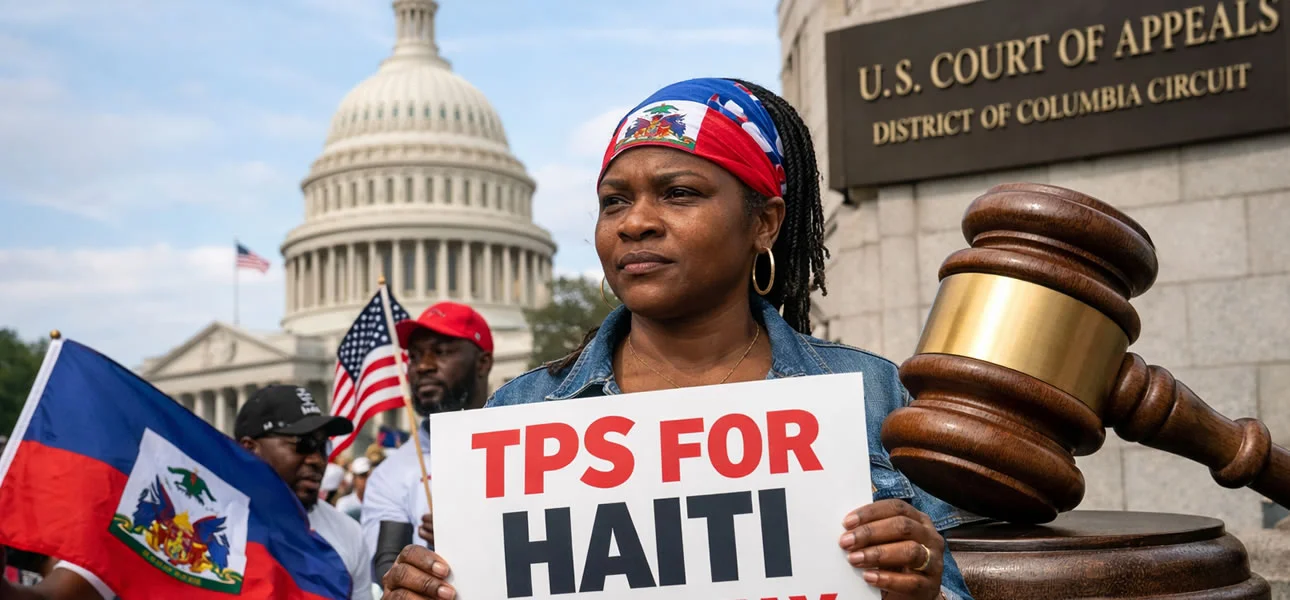
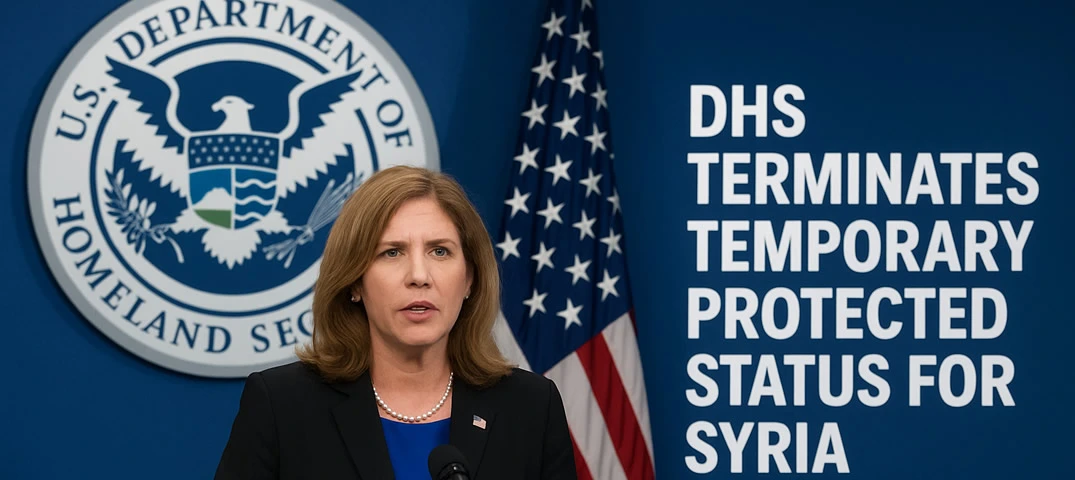
Key Takeaways

The U.S. Supreme Court's decision marks one of the most significant immigration rulings in recent years by allowing the federal government to terminate Temporary Protected Status (TPS) for hundreds of thousands of Haitian and Syrian nationals. Although the decision does not result in immediate deportations, it removes a major legal safeguard for TPS beneficiaries and significantly strengthens the Executive Branch's authority to end future TPS designations with limited judicial oversight. The next steps taken by the Department of Homeland Security (DHS) and U.S. Citizenship and Immigration Services (USCIS) will determine how this ruling affects immigrant families and the future of Temporary Protected Status in the United States.


  • On June 25, 2026, the U.S. Supreme Court ruled 6–3 in Mullin v. Doe, allowing the Trump administration to terminate TPS protections for approximately 350,000 Haitian nationals and 6,000 Syrian nationals.
  • The Court's conservative majority concluded that the federal TPS statute expressly limits judicial review of DHS decisions involving TPS designations and terminations.
  • The ruling lifted the lower court injunctions immediately, allowing the federal government to proceed with ending TPS protections for Haiti and Syria while the underlying lawsuits continue.
  • Although the Court addressed the government's authority to terminate TPS, it did not decide whether those terminations were lawful or discriminatory. Those questions remain pending before lower federal courts.
  • Justice Elena Kagan publicly delivered her dissent from the bench, and Justice Samuel Alito responded before the Court moved to its next case—an unusual exchange that drew significant attention from legal observers.
  • Immigration attorneys believe the decision could influence future TPS cases involving more than 1.3 million beneficiaries from 17 designated countries, including El Salvador, Honduras, Nepal, Ukraine, Ethiopia, and Cameroon.
  • TPS beneficiaries still have legal options, including asylum, family-based immigration, employment-based immigration, or other forms of immigration relief. Seeking legal advice as early as possible is strongly recommended.


Prepared by: María Fernanda García — InmigracionyVisas.com


Otros artículos de interés