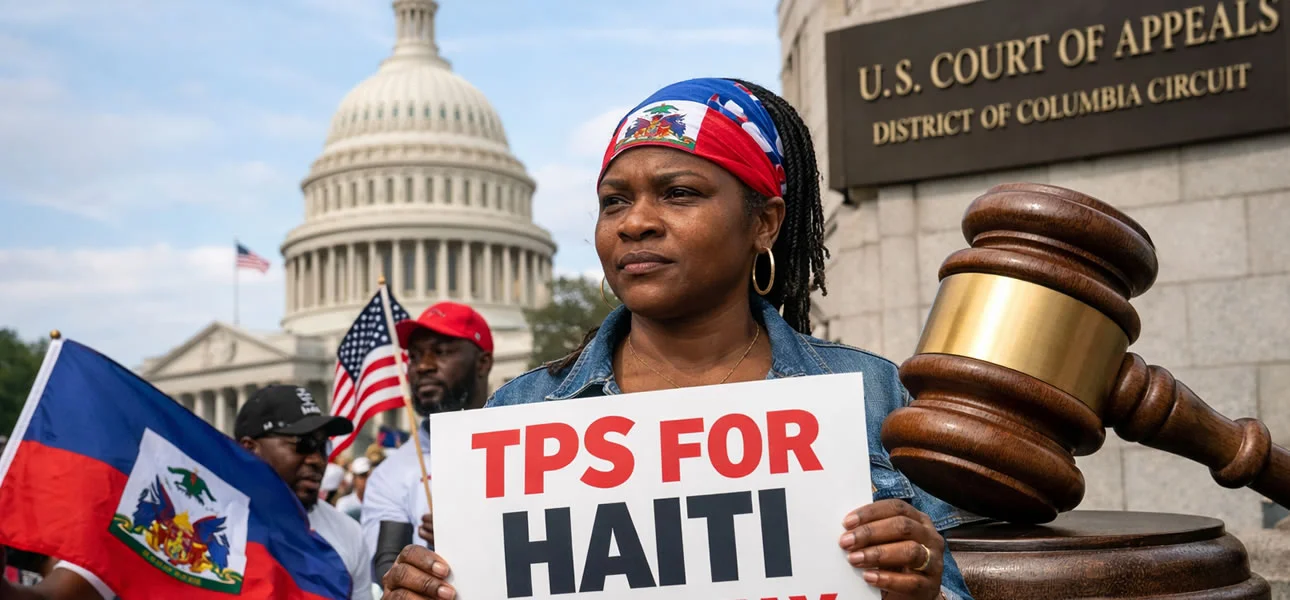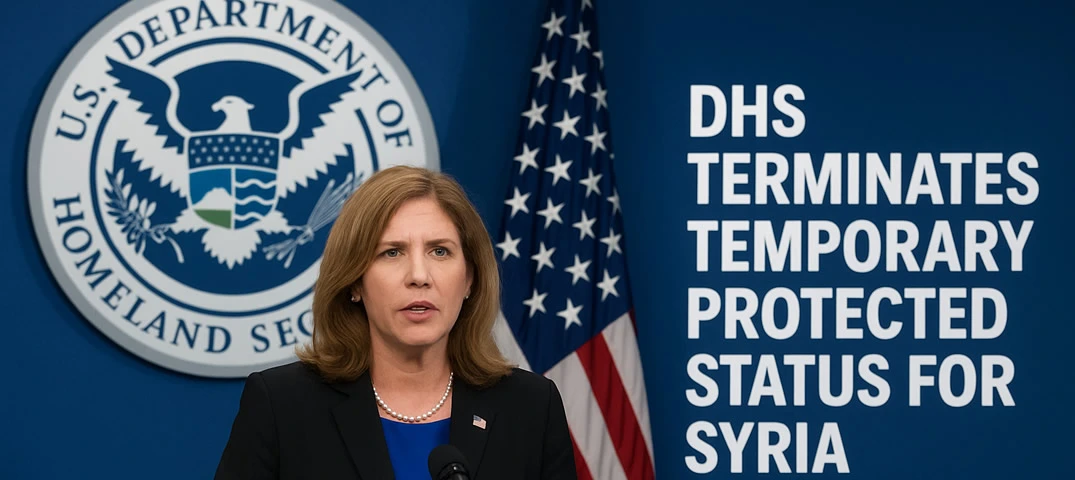
The U.S. Supreme Court ruled that the Trump administration may move forward with ending Temporary Protected Status (TPS) for approximately 356,000 Haitian and Syrian nationals. Learn who is affected, when the decision could take effect, and what legal immigration options may still be available.

On June 25, 2026, the U.S. Supreme Court ruled 6–3 in Mullin v. Doe, consolidated with Trump v. Miot, allowing the Trump administration to terminate Temporary Protected Status (TPS) for approximately 350,000 Haitian nationals and 6,000 Syrian nationals. Writing for the majority, Justice Samuel Alito concluded that the federal TPS statute limits judicial review of decisions made by the Department of Homeland Security (DHS) regarding the designation or termination of TPS. Although the ruling does not authorize immediate deportations, it removes court-ordered protections that had temporarily blocked the government's actions and could ultimately leave hundreds of thousands of immigrants without work authorization or lawful immigration status.
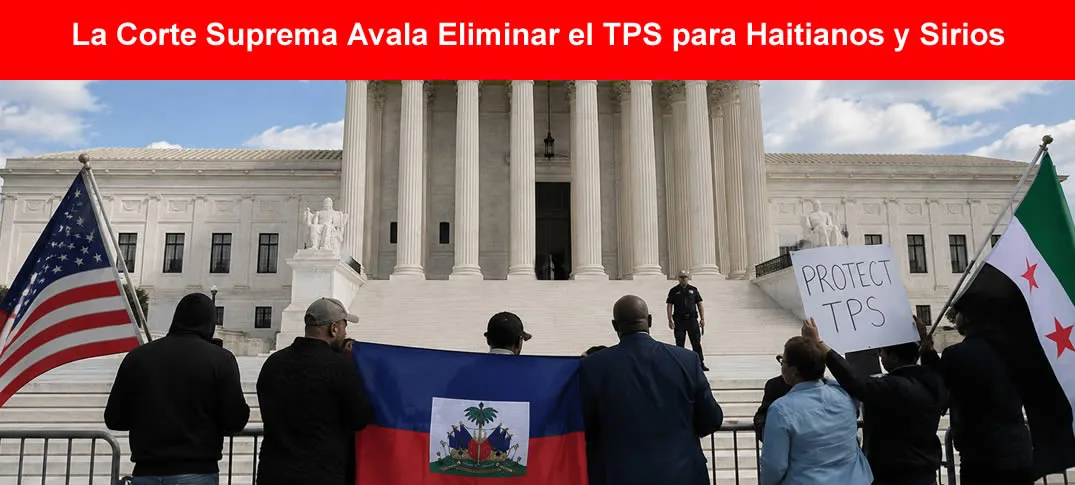
The U.S. Supreme Court has allowed the Donald Trump administration to end Temporary Protected Status (TPS) for more than 356,000 Haitian and Syrian nationals. The ruling could leave thousands of immigrants without work authorization or protection from deportation, while setting a significant legal precedent for future TPS cases in the United States.
The decision overturns lower court orders that had temporarily blocked the termination of the program and strengthens the Executive Branch's authority to end TPS designations without extensive judicial review.
The June 25, 2026 ruling in the consolidated cases Mullin v. Doe (No. 25-1083) and Trump v. Miot (No. 25-1084) addressed a key legal question: Can Temporary Protected Status (TPS) beneficiaries ask federal courts to block the termination of their TPS designation while legal challenges remain pending?
The Supreme Court's majority answered no. The Court held that the federal TPS statute—specifically 8 U.S.C. §1254a(b)(5)(A)—expressly limits judicial review of decisions made by the Secretary of Homeland Security regarding the designation, extension, or termination of Temporary Protected Status.
The vote followed the Court's familiar ideological divide, mirroring previous immigration decisions issued during President Trump's first administration as well as recent TPS litigation involving Venezuelan nationals. One of the most notable moments occurred when Justice Sonia Sotomayor read her dissent from the bench, an unusual practice typically reserved for cases involving profound disagreement. Justice Samuel Alito publicly responded before the Court moved on to the next case, an exchange that legal observers described as highly unusual.
↑ Back to Table of ContentsFive Haitian nationals filed suit in the U.S. District Court for the District of Columbia, arguing that former DHS Secretary Kristi Noem unlawfully terminated Haiti's TPS designation without consulting other federal agencies and that the decision was motivated by racial discrimination. The district court agreed, finding evidence of what it described as "anti-Black and anti-Haitian animus." The U.S. Court of Appeals later declined to stay that ruling.
Seven Syrian nationals—some current TPS holders and others seeking protection—filed suit in the U.S. District Court for the Southern District of New York. In November 2025, the federal judge ruled in their favor, concluding that Secretary Noem failed to follow the legal procedures required to terminate Syria's TPS designation. The Second Circuit Court of Appeals also refused to suspend that order.
During proceedings before the Supreme Court, attorneys representing the Haitian plaintiffs argued that the federal government relied on what they described as "a knowingly false statement" claiming that Secretary Noem had consulted with the U.S. Department of State before ending Haiti's TPS designation. According to the plaintiffs, no such consultation occurred. Justice Samuel Alito's majority opinion did not address this allegation.
Although the Supreme Court's ruling does not end the underlying lawsuits—which will continue in the lower federal courts—it has immediate and far-reaching consequences for hundreds of thousands of immigrants currently protected by Temporary Protected Status.
Once the TPS terminations take effect, Haitian and Syrian beneficiaries could lose their legal immigration status and employment authorization. Many may become undocumented unless they qualify for another immigration benefit, placing their jobs, driver's licenses, and other legal protections at risk.
Thousands of TPS holders are parents of U.S.-born children who are American citizens. If deportation proceedings begin, many families could face difficult choices between separation and relocating together to countries still experiencing humanitarian crises.
Haiti continues to experience widespread gang violence and political instability under a prolonged state of emergency. Syria also remains affected by years of armed conflict and humanitarian challenges. At the time of the ruling, the U.S. Department of State continued to advise Americans not to travel to either country.
Immigration attorneys say the decision establishes an important legal precedent that strengthens the Executive Branch's authority to terminate Temporary Protected Status with limited judicial review. TPS beneficiaries from countries including El Salvador, Honduras, Nepal, Ukraine, and others will be closely monitoring future legal developments.
Every immigration case is different. An experienced immigration attorney can evaluate whether you qualify for another legal pathway, including family-based immigration, asylum, employment-based status, or other forms of humanitarian relief. There is no one-size-fits-all solution—your individual circumstances matter.
If you fear persecution in your home country because of your race, religion, nationality, political opinion, or membership in a particular social group, you may qualify to apply for asylum by filing Form I-589. Unlike TPS, asylum is based on your personal circumstances rather than general country conditions.
If you have a U.S. citizen or lawful permanent resident spouse, parent, or child, you may be eligible for a family-sponsored immigration petition. Although processing times may be lengthy, beginning the process as soon as possible could be critical.
The Supreme Court's ruling does not resolve the underlying legal challenges to the TPS terminations. If lower federal courts ultimately determine that the terminations were unlawful, some TPS protections could potentially be restored. Stay informed through trusted organizations such as IRAP, AILA, and ILRC.
Senate Democratic Leader Chuck Schumer has announced legislation aimed at extending Temporary Protected Status for Haitian nationals. Contacting your members of Congress and supporting immigrant advocacy organizations may help influence future legislative action.
Immigration attorneys recommend that TPS beneficiaries take the following steps as soon as possible:
Not every criminal offense makes an applicant ineligible for asylum. Depending on the type of offense and the circumstances of the case, some misdemeanor convictions may not prevent an individual from qualifying for protection. However, all criminal history must be fully disclosed when filing Form I-589. Providing false information may constitute immigration fraud and could result in the denial of your application. Always consult a qualified immigration attorney before filing.
In a 6–3 decision in Mullin v. Doe, consolidated with Trump v. Miot, the U.S. Supreme Court held that the federal TPS statute limits judicial review of decisions made by the Department of Homeland Security (DHS) regarding the termination of TPS designations. The ruling lifted lower court injunctions that had blocked the termination of Temporary Protected Status for approximately 350,000 Haitian nationals and about 6,000 Syrian nationals, allowing the federal government to move forward with ending those protections.
The Supreme Court's decision removed the legal injunctions but did not establish a specific termination date for all TPS beneficiaries. The Department of Homeland Security must still implement the decision through its normal administrative process. Because every case is different, you should consult an experienced immigration attorney immediately to determine when your current TPS and work authorization expire and whether you qualify for another immigration benefit.
No. The Supreme Court's decision does not authorize immediate deportations. However, individuals who lose Temporary Protected Status may become subject to removal proceedings if they no longer have another lawful immigration status. Removal generally requires formal immigration proceedings, including the issuance of a Notice to Appear (NTA) and a hearing before an immigration judge. The risk of ICE enforcement may increase, making legal representation especially important.
Possibly. Eligibility for asylum depends on your individual circumstances rather than your country's TPS designation. If you fear persecution because of your race, religion, nationality, political opinion, or membership in a particular social group, you may qualify to apply for asylum by filing Form I-589. If you have been in the United States for more than one year without previously applying for asylum, additional legal requirements and exceptions may apply. An immigration attorney can evaluate your eligibility.
No. The ruling only resolves whether lower federal courts may temporarily block the government's TPS terminations while litigation continues. The underlying lawsuits challenging the legality of those terminations—including claims of procedural violations and discrimination—will continue in the lower federal courts. Future rulings could still affect the outcome of these cases.
Yes. Immigration attorneys believe the decision establishes an important legal precedent for other countries currently designated for Temporary Protected Status. TPS beneficiaries from countries such as El Salvador, Honduras, Nepal, Ukraine, Ethiopia, Cameroon, and others should closely monitor future DHS announcements and consult legal counsel regarding their individual immigration options.